Africa's diaspora sent home $124 billion in 2025
Remittances to Africa grew 86% in a decade, but sending money to Southern Africa is still the world's most expensive.
Key points
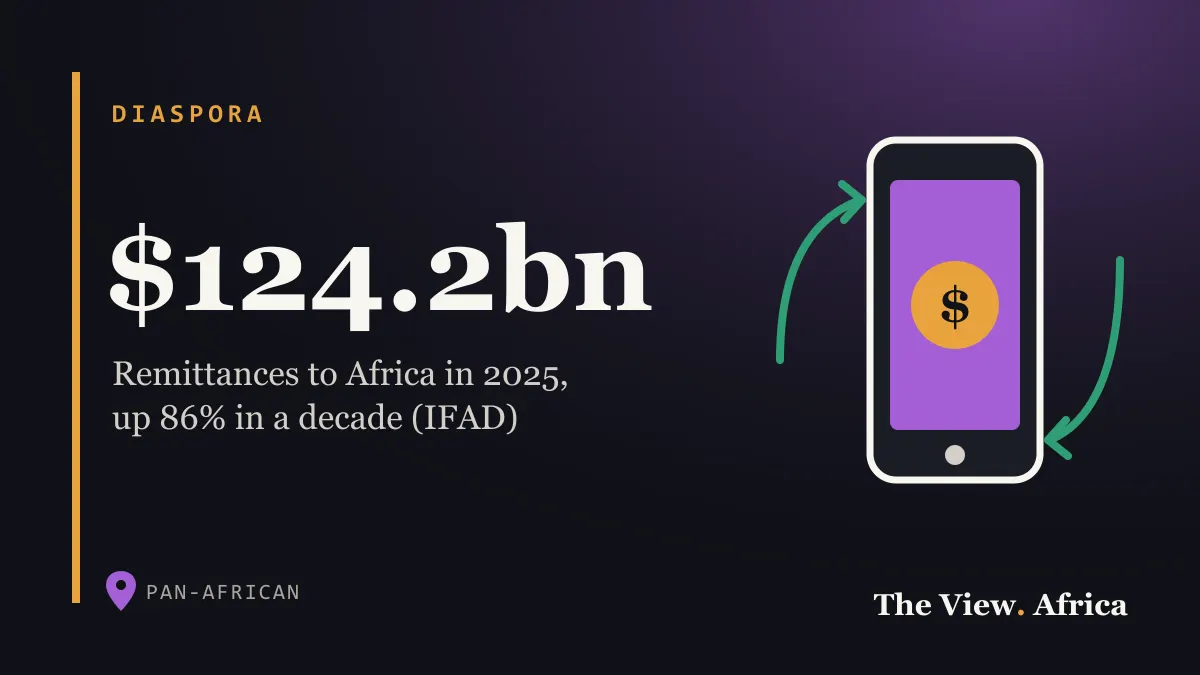
- Remittances to Africa reached $124.2 billion in 2025, up 86% since 2016, according to IFAD's Sending Money Home 2026 report published on 14 September 2026.
- Egypt ($41.5bn), Nigeria ($22.8bn), Morocco ($13.7bn), Ethiopia ($7.1bn) and Kenya ($5.0bn) receive about 73% of the total.
- The average cost of sending money to Africa is 7.2%; fully digital transfers average 4.59% against 7.30% for cash-based services.
Money sent home by Africans living abroad reached $124.2 billion in 2025, up 86% in a decade, according to Sending Money Home 2026, a report published on 14 September by the International Fund for Agricultural Development (IFAD).
The UN agency found that global remittances to low- and middle-income countries nearly doubled over the same period, to $728.6 billion. That is more than four times global official development assistance, and more than foreign direct investment to those countries.
Five countries receive most of the money
According to figures from the report cited by Capital Ethiopia, five countries account for about 73% of remittances to Africa:
- Egypt: $41.5 billion
- Nigeria: $22.8 billion
- Morocco: $13.7 billion
- Ethiopia: $7.1 billion
- Kenya: $5.0 billion
For some smaller economies, the diaspora is a pillar of national income. Remittances are equal to about 22% of GDP in The Gambia and about 21% in Liberia, Comoros and Lesotho.
Sending money is getting cheaper, slowly
The average cost of sending money to Africa has fallen to 7.2% of the amount sent, from 9.0% in 2016. But costs vary widely by region: from 4.9% for transfers to Western Africa to 10.4% to Southern Africa, the most expensive destination region in the world.
Digital services make a clear difference. Fully digital transfers cost an average of 4.59%, compared with 7.30% for cash-based services. That gap helps explain why digital money-transfer companies are competing for diaspora customers.
A lifeline for rural families
About a third of remittances to Africa, around $42 billion, go to rural areas. In Eastern Africa the share is 51%. These are often the places where formal jobs, banks and public services are hardest to reach.
IFAD argues that the impact of remittances is greatest when families also have access to affordable, trusted financial services, so that money sent home can go into savings, insurance and small businesses as well as day-to-day spending.
Sources
Spotted an error? Read our corrections policy or tell us.