Dangote and Ethiopia to build a $660 million fuel pipeline from Djibouti
The 120km line and storage depots should cut Ethiopia's reliance on tanker trucks within 18 months.
Key points
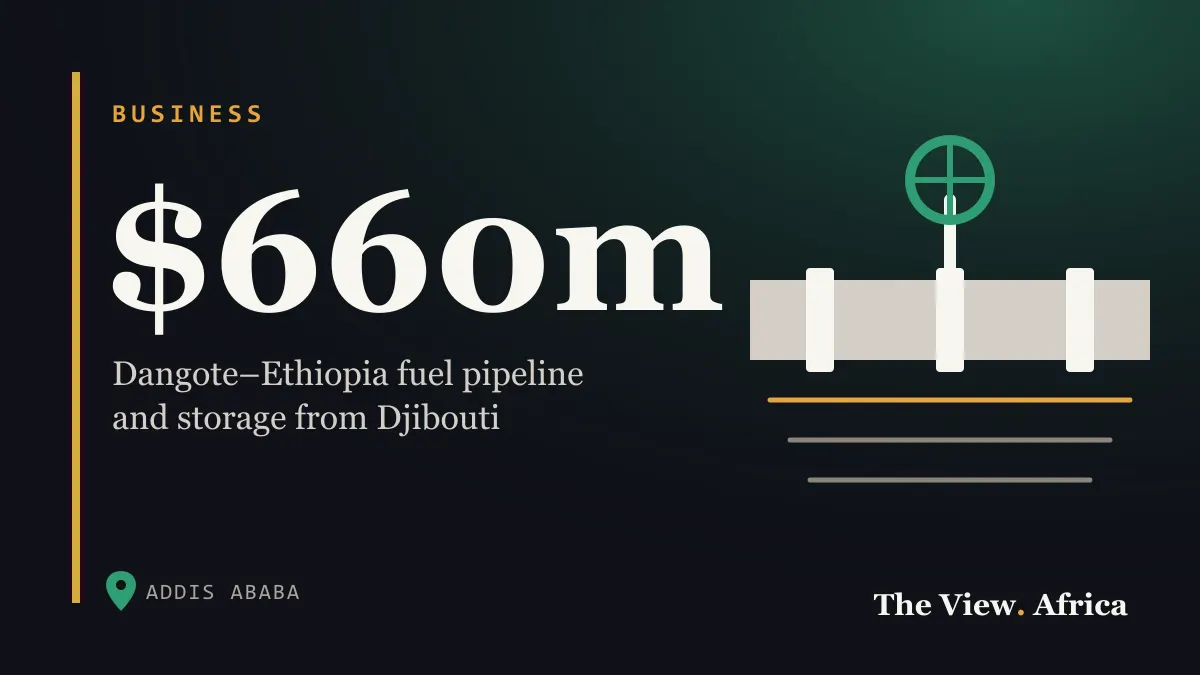
- Dangote Group and Ethiopian Investment Holdings will invest $660 million in a fuel pipeline and storage linking Djibouti to Ethiopia, announced on 24 September 2026.
- The 120km pipeline will run from Damerjog in Djibouti to Dewele in Ethiopia and is expected to operate within 18 months.
- It aims to cut Ethiopia's reliance on tanker trucks, and follows Dangote's Lamu refinery groundbreaking in Kenya.
Aliko Dangote is expanding into the Horn of Africa. Dangote Group and Ethiopian Investment Holdings, Ethiopia's sovereign wealth fund, will invest $660 million in a fuel pipeline and storage linking landlocked Ethiopia to Djibouti's coast. The project was announced on 24 September 2026 by Ethiopian Prime Minister Abiy Ahmed, Djibouti's President Ismail Omar Guelleh and Dangote.
The project
- Pipeline: 120km, from Damerjog in Djibouti to Dewele on the Ethiopian side of the border.
- Products: refined fuels, including petrol and jet fuel, arriving by sea.
- Storage: about 375,000 cubic metres at Damerjog and 800,000 cubic metres at Dewele, according to allAfrica. Ethiopia's state news agency ENA gave a lower total of 400 million litres.
- Timeline: expected to start operating within 18 months.
"This is Africa building the infrastructure it needs. It will help African economies trade more with one another," Dangote said, according to ENA.
Why it matters
Ethiopia, a country of more than 120 million people, gets almost all its fuel through Djibouti, mostly by tanker truck along a crowded corridor. A pipeline should cut transport costs and delivery times and ease pressure on the roads.
For Dangote, it is one of several big moves in East Africa this month. The group is also developing a fertiliser project in Ethiopia and has just broken ground on the Lamu refinery in Kenya. Dangote says the group plans $50 billion of investment across Africa by 2030.
Sources
Spotted an error? Read our corrections policy or tell us.