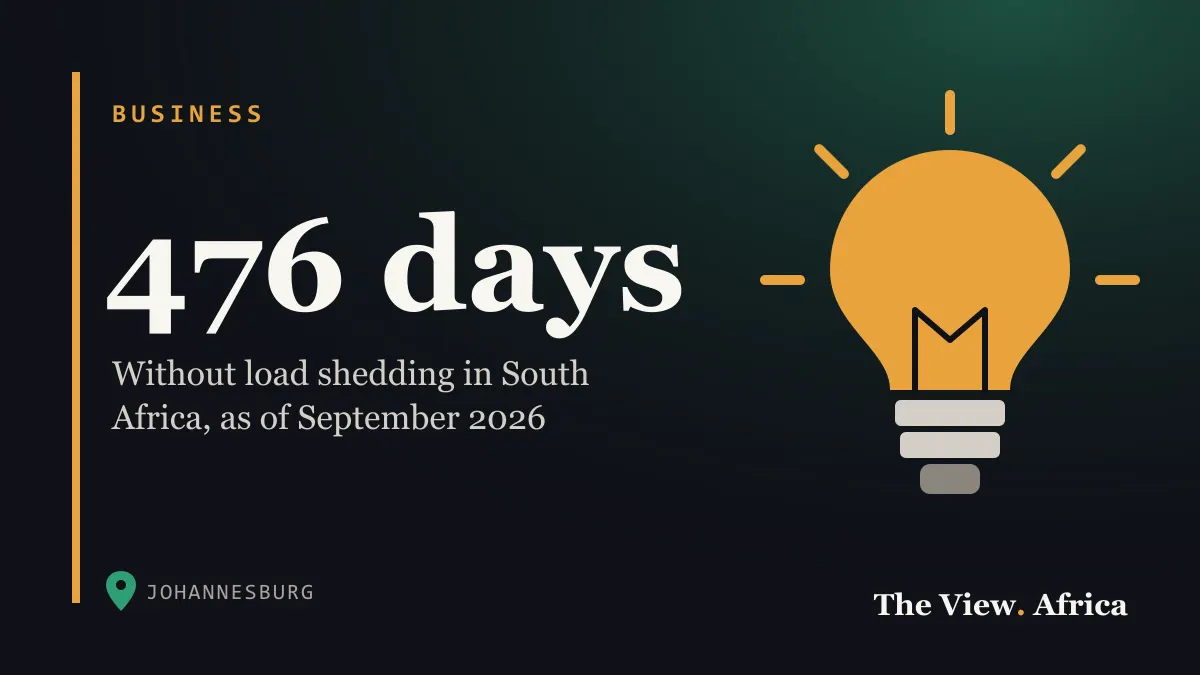
South Africa passes 476 days without load shedding
Eskom kept the lights on through the whole 2026 winter, a turnaround after years of rolling blackouts.
Key points
- Eskom reported 476 consecutive days without load shedding by late September 2026, including the entire 2026 winter.
- South Africa passed 365 days without load shedding on 16 May 2026, a run not seen since 2018.
- Eskom’s energy availability factor rose to 67.79%, its highest since 2020, though more than half a million households are still in a targeted “load reduction” programme.
For years, South Africans planned their lives around load shedding, the scheduled rolling blackouts caused by an unreliable power system. In 2026, that changed. By late September, Eskom said the country had gone 476 consecutive days without load shedding.
The milestones
- 12 March 2026: 300 days without load shedding.
- 16 May 2026: a full year without load shedding, a run not seen since 2018.
- Winter 2026: Eskom met demand throughout the winter peak, even when cloudy weather cut rooftop solar output.
What changed
Eskom credits better maintenance and more reliable power stations. Its energy availability factor, a measure of how much of its fleet is available, rose to 67.79%, its highest since 2020, while unplanned outages fell sharply. The growth of rooftop solar has also eased pressure on the grid.
Not the end of every outage
Load shedding is not the same as every power cut. Eskom says more than half a million households are still in a targeted "load reduction" programme in areas with high illegal connections or unpaid bills, and local faults still cause outages. It aims to address load reduction progressively by 2027.
Why it matters
Reliable power is essential for investment and jobs. Ending load shedding removes one of the biggest brakes on South Africa's economy, as electricity access also expands elsewhere on the continent under Mission 300.
Sources
Spotted an error? Read our corrections policy or tell us.