Made in Africa: the push to produce the continent's own vaccines
Gavi's first payments to African manufacturers are due this year, and 11 African-made vaccines are on the way.
Key points
- Gavi expects to make its first payments to African vaccine manufacturers in the second half of 2026 through its $1.2 billion, ten-year African Vaccine Manufacturing Accelerator.
- A June 2026 CHAI report found 11 African-made vaccines are expected to reach the continental market within five years; six manufacturers have facilities with active technology transfers.
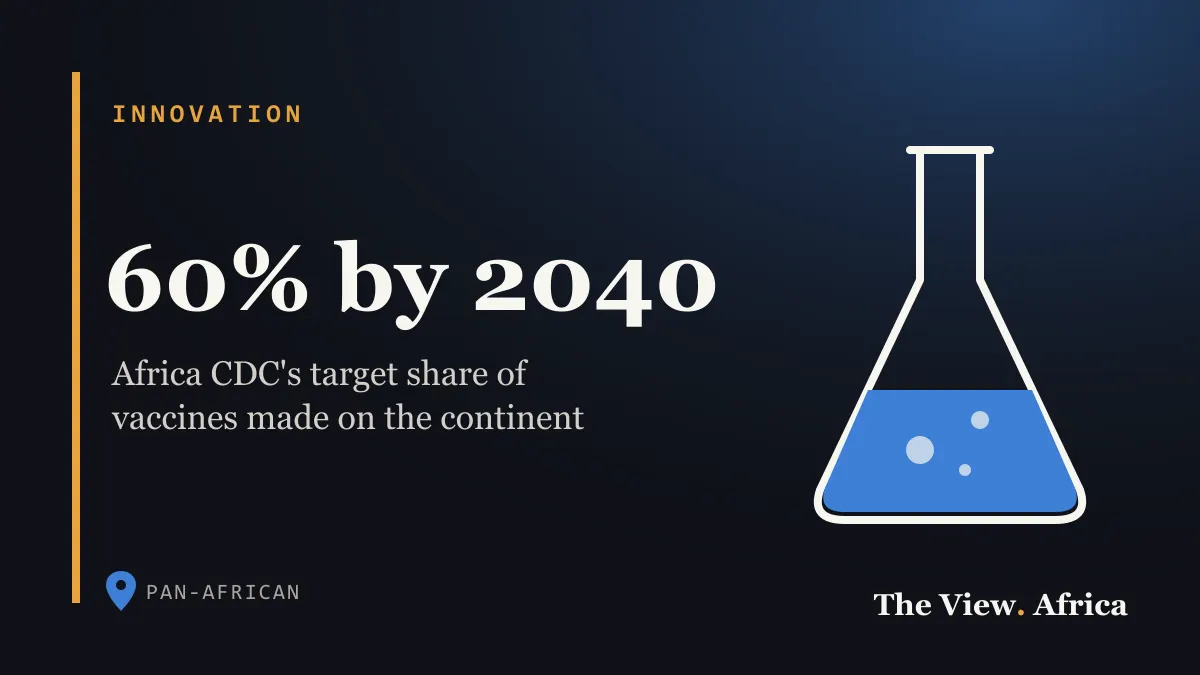
- Africa CDC aims for 60% of the vaccines Africa uses to be made on the continent by 2040.
Africa's push to make its own vaccines is reaching an important stage. Gavi, the global vaccine alliance, expects to make its first payments to African vaccine manufacturers in the second half of 2026, through its $1.2 billion African Vaccine Manufacturing Accelerator, Semafor reports.
The ten-year accelerator pays African manufacturers incentives linked to the vaccines they actually produce and sell, to make local production commercially viable.
Eleven African-made vaccines on the way
A June 2026 report by the Clinton Health Access Initiative (CHAI) found that 11 African-made vaccines are expected to reach the continental market within five years. Several vaccines have already been licensed for use in their home countries since 2024.
Six manufacturers have built facilities with active technology transfers under way, including Atlantic Lifesciences in Ghana. CHAI assessed 27 manufacturers in total. South Africa's Biovac is building end-to-end vaccine manufacturing, and Egypt's Eva Pharma produces Eli Lilly's arthritis treatment Olumiant.
The goal: 60% by 2040
The Africa Centres for Disease Control and Prevention (Africa CDC) wants 60% of the vaccines Africa uses to be made on the continent by 2040, up from a very small share today. "It's time for us to manufacture our own vaccines," Africa CDC Director-General Jean Kaseya said in September.
The hurdles
CHAI identified five barriers: regulatory delays, uncertain demand, slow financing, delays from technology-transfer partners and gaps in the workforce. Only one African manufacturer had filed with regulators for a continental product.
Regulators are central. "If your regulator is not strong, your product is a waste," said Dr Delese Mimi Darko of the African Medicines Agency.
Why it matters
The COVID-19 pandemic showed how exposed Africa is when it depends on imported vaccines. Disease outbreaks are a reminder of why the continent wants the capacity to make its own.
Sources
Spotted an error? Read our corrections policy or tell us.