More than 1,000 new African genomes join global science
A Wits-led project sequenced people from communities almost absent from genetic databases, to make medicine work better for Africans.
Key points
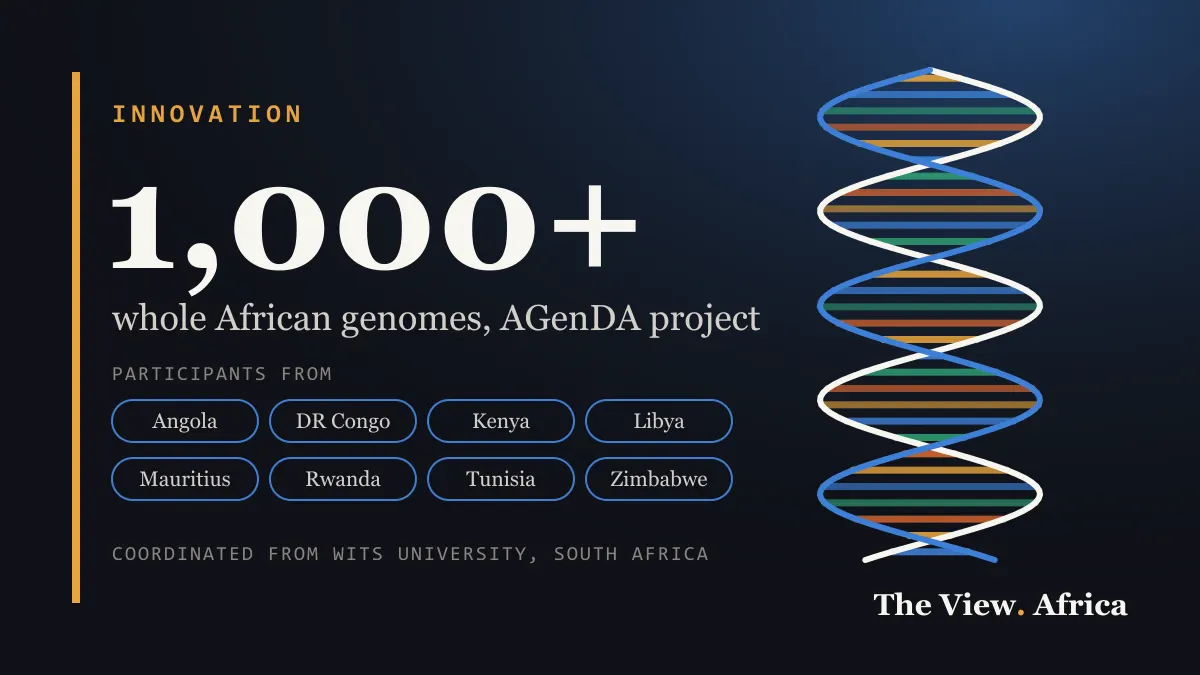
- The Assessing Genetic Diversity in Africa (AGenDA) project generated whole-genome sequences from more than 1,000 people in communities that are largely missing from global databases.
- Participants came from Angola, the DRC, Kenya, Libya, Mauritius, Rwanda, Tunisia and Zimbabwe, with coordination from Wits University in South Africa.
- The work, published in Nature, is expected to reveal millions of new genetic variants and improve disease-risk prediction for African patients.
Africa is the most genetically diverse continent on Earth, yet African people are among the least represented in the genetic data that modern medicine relies on. A project led from Wits University in Johannesburg is starting to change that.
The Assessing Genetic Diversity in Africa (AGenDA) project has produced whole-genome sequences for more than 1,000 people from communities that are largely missing from global databases. The findings were published in the journal Nature in January 2026.
Who took part
Participants were recruited in Angola, the Democratic Republic of Congo, Kenya, Libya, Mauritius, Rwanda, Tunisia and Zimbabwe, with the project coordinated from South Africa. The team deliberately included under-studied groups, such as hunter-gatherer communities, Nilo-Saharan and Afro-Asiatic speakers, and North African and Indian Ocean island populations.
"Our strategy focused on understudied geographies to address prominent gaps, such as North Africa," said Dr Ananyo Choudhury, one of the project's leaders.
Why it matters for patients
Most genetic datasets come from people of European origin. That means tools used to predict disease risk, or to choose medicines and doses, can work poorly for Africans. "Without African data, risk-prediction models are biased and often inaccurate for African patients," said Professor Scott Hazelhurst, head of bioinformatics on the project.
The researchers expect the data to uncover millions of new genetic variants, which could improve how the risk of cancer, mental illness, diabetes and heart disease is predicted and treated.
Built in Africa
The project is led by Professor Michèle Ramsay, Director of the Sydney Brenner Institute for Molecular Bioscience at Wits. It is part of a wider push for African science to be led from the continent, alongside efforts to make vaccines in Africa.
Sources
Spotted an error? Read our corrections policy or tell us.