Ghana exits its IMF bailout programme after a strong recovery
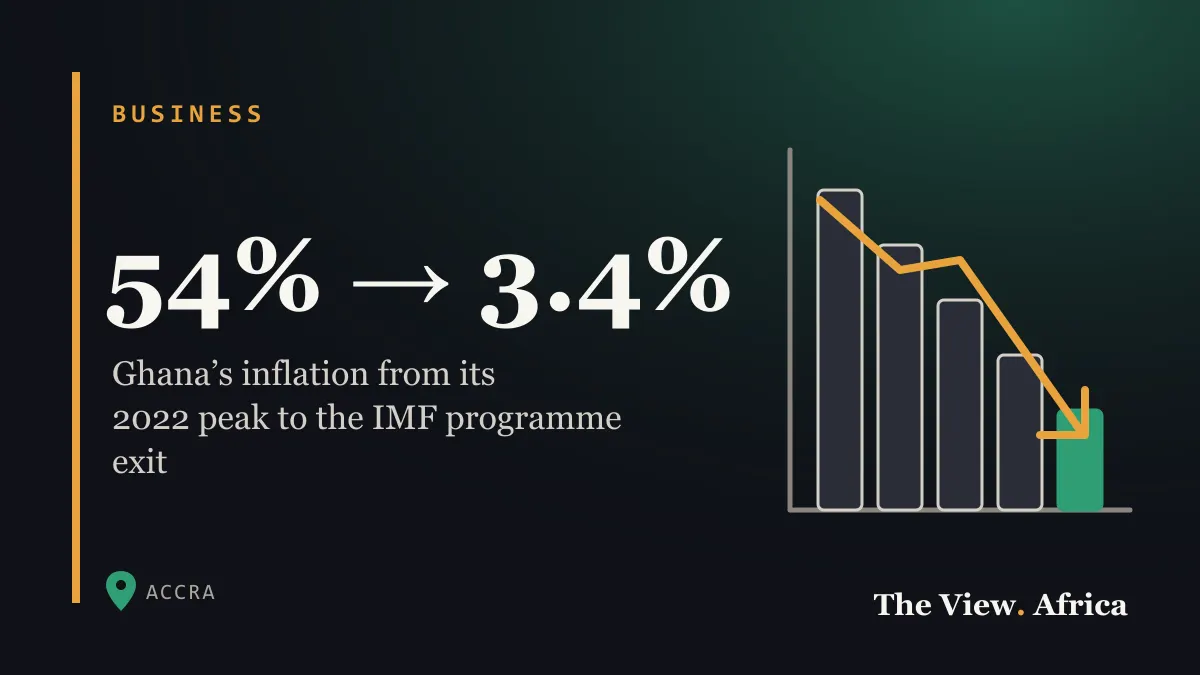
Inflation fell from 54% to 3.4% and debt from 92% to 52% of GDP over the three-year programme.
Key points
- Ghana exited its three-year, $3 billion IMF Extended Credit Facility on 15 May 2026.
- Headline inflation fell from a peak of 54.1% in December 2022 to 3.4%, and public debt from 92.4% to 52.0% of GDP.
- Ghana moved to a non-financing IMF Policy Coordination Instrument; its credit rating has risen to “B” with a positive outlook.
Ghana has completed its International Monetary Fund bailout programme. The country officially exited its three-year, $3 billion Extended Credit Facility on 15 May 2026.
The programme began in May 2023, after Ghana fell into a severe economic crisis and defaulted on most of its external debt.
A dramatic turnaround
- Inflation fell from a peak of 54.1% in December 2022 to a record low of 3.4% by the time Ghana exited the programme.
- Public debt fell from 92.4% to 52.0% of GDP.
- Reserves rose to about $14.5 billion by February 2026, almost six months of import cover.
- Ghana's credit rating improved from restricted default to "B" with a positive outlook, after five successive upgrades.
What happens now
Ghana has moved to an IMF Policy Coordination Instrument. It provides no money, but it offers technical support and signals to investors that the country's policies remain credible.
Why it matters
Three years ago, Ghana was in one of the worst economic crises in its history. Its recovery shows what fiscal discipline and debt restructuring can achieve, and gives investors more confidence in one of West Africa's key economies.
Sources
Spotted an error? Read our corrections policy or tell us.