Trade between African countries hits $220 billion
The AfCFTA's chief says the free trade area is starting to deliver, but implementation still decides everything.
Key points
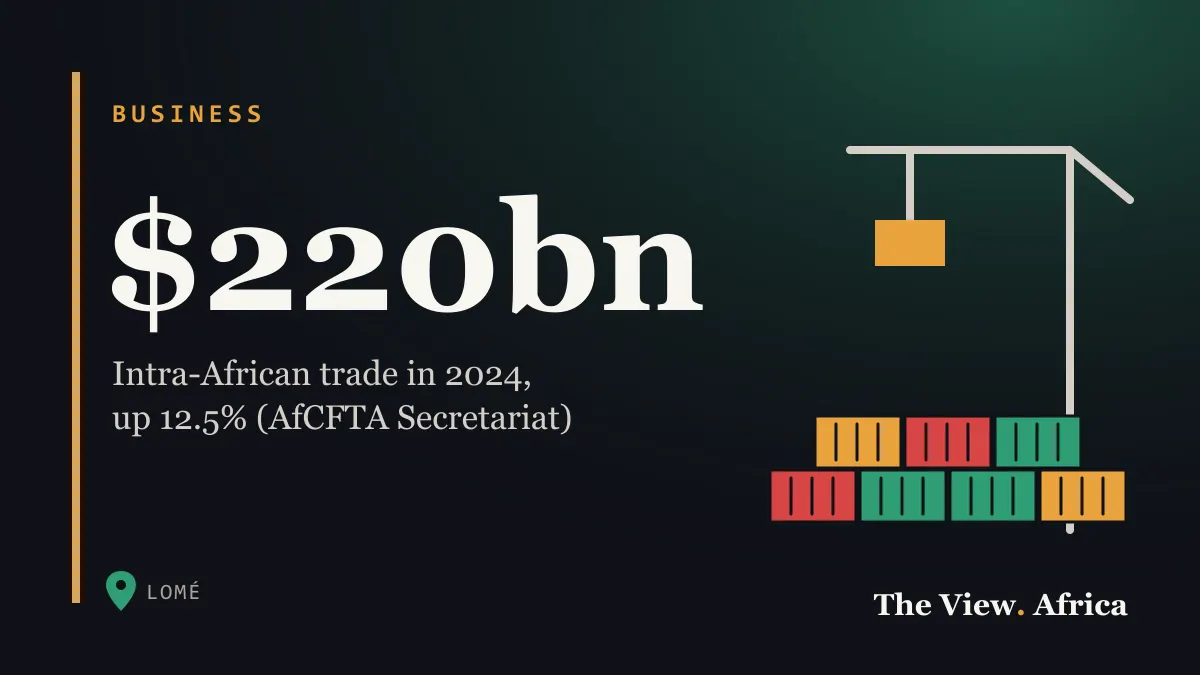
- Intra-African trade reached $220 billion in 2024, up 12.5% on 2023, AfCFTA Secretary-General Wamkele Mene said in Lomé on 19 May 2026.
- The AfCFTA's Guided Trade Initiative, launched in September 2022 with eight pilot countries, showed goods could move under AfCFTA preferences in practice.
- The EU and the AfCFTA Secretariat signed a memorandum of understanding on 20 April 2026 to support intra-African trade and investment.
Africans are trading more with each other. Intra-African trade reached $220 billion in 2024, up 12.5% on 2023, according to Wamkele Mene, Secretary-General of the African Continental Free Trade Area (AfCFTA) Secretariat.
Mene gave the figure in Lomé, Togo, on 19 May 2026, at the opening of the third Biashara Afrika business and investment forum. He said the continent was "beginning to witness impressive intra-regional trade under the AfCFTA", Xinhua reported.
From paper to practice
The AfCFTA is the world's largest free trade area by number of countries. It aims to create a single African market by cutting tariffs and other barriers between member states.
A key tool has been the Guided Trade Initiative, launched in September 2022. It started with eight pilot countries from all five regions of the continent (Cameroon, Egypt, Ghana, Kenya, Mauritius, Rwanda, Tanzania and Tunisia) to show that goods could move under AfCFTA preferences in practice.
Mene also pointed to progress in negotiations on rules of origin, particularly for the automotive industry. Rules of origin decide which goods count as "African-made" and so qualify for lower tariffs.
New partnerships
On 20 April 2026, the European Union and the AfCFTA Secretariat signed a memorandum of understanding to strengthen their partnership and support intra-African trade and investment.
What still has to happen
Mene has been clear that success is not automatic. It depends on political commitment, strong institutions, coordinated investment, private-sector participation and effective implementation at national, regional and continental levels.
Infrastructure matters as well as policy. Better rail corridors and digital infrastructure make it cheaper to move goods and payments across borders.
Sources
Spotted an error? Read our corrections policy or tell us.